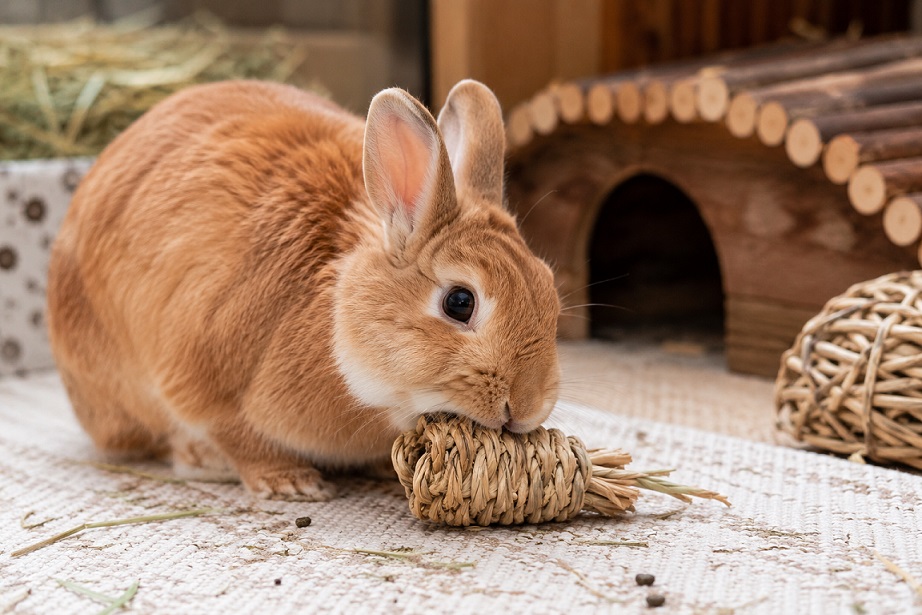
If you share your home with a rabbit, you quickly learn that almost anything within reach can become a potential chew toy. Cardboard, wooden furniture, baseboards, blankets, cables, baskets, and even the corners of walls can attract a rabbit that seems determined to investigate everything with its teeth.
Chewing is not automatically a sign that something is wrong. Rabbits are built to chew, and regular chewing is an important part of normal behavior. The more useful question is whether your rabbit has enough appropriate opportunities to chew and whether the pattern has changed recently.
A rabbit that has always enjoyed cardboard and untreated wood is behaving very differently from one that suddenly starts obsessively attacking furniture or becomes unusually focused on chewing non-food objects. Understanding the difference can help owners protect the home without trying to suppress a behavior the rabbit genuinely needs.
Why Rabbits Need to Chew
Rabbit teeth grow continuously, so chewing plays an important role in keeping them naturally worn down. Hay and other appropriate fibrous foods also contribute to normal dental wear, while chewing provides an activity that is both physically and mentally engaging.
This is one reason simply removing everything the rabbit likes to chew rarely solves the problem. If the rabbit has fewer acceptable outlets, it may become even more interested in the remaining furniture, wires, or household objects.
The goal is not to stop chewing. It is to make appropriate chewing easier and more rewarding than chewing the things you want to protect.
1. Your Rabbit Is Chewing Furniture Constantly
Furniture can be especially attractive because it is large, stable, and always available. A wooden chair leg does not disappear after five minutes, and a rabbit can return to it repeatedly whenever it wants something to do.
If your rabbit repeatedly targets the same piece of furniture, look at what makes that location appealing. It may be easy to reach, positioned along a favorite route, or made from a texture the rabbit enjoys.
Protect the area rather than relying on repeated verbal corrections. Physical barriers, furniture placement, and rabbit-safe coverings can prevent access while you provide more suitable chewing options nearby.
2. Cardboard Becomes the Favorite Toy
Cardboard boxes and tubes can be excellent enrichment for rabbits when they are plain and free from unsafe materials. Some rabbits enjoy shredding them, pushing them around, entering them, and gradually turning them into a pile of pieces.
This behavior is usually nothing to worry about by itself. In fact, a rabbit enthusiastically investigating a cardboard box may simply be using its natural curiosity in a safe way.
Rotate cardboard items occasionally so the rabbit has something different to explore. A box with multiple openings, a simple tunnel, or several pieces arranged in a new configuration can create more interest without requiring complicated toys.
3. Your Rabbit Chews When Nothing Else Is Happening
Boredom can absolutely contribute to destructive chewing. Rabbits need opportunities to move, explore, forage, and interact with their environment. A rabbit living in a small, predictable space with little variation may start looking for its own entertainment.
Watch when the chewing happens. Does your rabbit become especially destructive during long periods when nobody interacts with it? Does it repeatedly target the same objects after spending hours without exploration?
Adding variety can help. Offer safe objects to investigate, create simple forage opportunities, rearrange appropriate enrichment, and provide enough space for normal movement. The objective is not constant entertainment but a more interesting environment.
4. The Rabbit Suddenly Starts Chewing More
A sudden increase in chewing deserves more attention than a rabbit that has always been enthusiastic about it. Changes in routine, environment, enrichment, diet, or access to preferred materials can all influence behavior.
Think about what happened before the change. Did the rabbit move into a different area? Did you remove a favorite toy? Has the daily routine changed? Is another pet spending more time nearby? Even small environmental changes can affect how a rabbit uses its space.
At the same time, do not assume every sudden behavioral change is boredom. A noticeable change in eating, chewing, grooming, energy, or bathroom habits can have other explanations and should be considered as part of the bigger picture.
5. Your Rabbit Targets Cables and Dangerous Objects
Electrical cables are one of the biggest household hazards for a free-roaming rabbit. A curious rabbit does not understand that a cable is dangerous, and a single bite can cause serious injury.
Do not try to train the rabbit to ignore exposed wires as your primary safety strategy. Secure cables physically, block access to dangerous areas, and inspect the rabbit's environment from its level. If you can reach something while sitting on the floor, assume the rabbit can investigate it too.
The same principle applies to toxic plants, treated wood, small objects, and materials that could be swallowed. Rabbit-proofing is more reliable than hoping the animal will remember a correction.
6. Blankets and Soft Materials Become Targets
Some rabbits enjoy pulling, digging, and chewing fabric. A blanket may become especially interesting because it can be moved around, scratched, and reshaped.
The concern is not simply that the rabbit destroys the fabric. The important question is whether it is actually swallowing pieces. Ingesting significant amounts of material can create a serious digestive problem.
If your rabbit repeatedly eats fabric rather than simply digging or rearranging it, remove access to the material and offer safer alternatives. Do not assume that a soft object is harmless just because it is marketed as a pet accessory.
7. Chewing Comes With Changes in Eating
Chewing behavior should always be considered alongside appetite. A rabbit that suddenly becomes interested in chewing unusual objects while eating less hay or approaching food differently may be showing a change that deserves attention.
Rabbits can be very good at hiding signs of discomfort. Owners should therefore pay attention to small changes in food intake, droppings, activity, grooming, and posture rather than waiting for a dramatic symptom.
If a rabbit stops eating, produces significantly fewer droppings, appears painful, becomes unusually quiet, or shows another abrupt change, do not assume the cause is simply boredom or a preference for chewing.
How to Give a Rabbit Better Things to Chew
Start with the basics: unlimited access to appropriate hay, safe rabbit-friendly chewing materials, and enough space to move and explore. Plain cardboard, suitable untreated wood, and other rabbit-safe enrichment can provide different textures without turning the home into a collection of forbidden objects.
Variety matters more than having dozens of toys available at once. Rotate safe items, change the arrangement of an enclosure, and create simple opportunities for the rabbit to search for food. A few changes can make familiar objects interesting again.
Observe what your rabbit actually chooses. One rabbit may love cardboard while another prefers wooden items. Another may spend more time digging, tossing, or searching than chewing. Enrichment works best when it matches the individual animal rather than following a fixed formula.
Rabbit-Proofing Is Part of the Solution
A rabbit-safe home does not depend on perfect training. Rabbits explore with their mouths, and curiosity can return them to an object even after they have been redirected many times.
Use barriers around furniture that cannot be protected, cover exposed wires, remove unsafe plants, and block access to narrow areas where the rabbit could become trapped. Think about the room from the rabbit's perspective instead of the owner's.
Supervision is especially important when a rabbit is exploring a new area. A rabbit that has behaved perfectly for months can still discover a new cable, plant, or piece of furniture that suddenly becomes interesting.
When Chewing May Mean More Than Boredom
Chewing by itself is usually normal rabbit behavior. The bigger warning signs are changes that happen around it. Reduced appetite, fewer droppings, unusual quietness, changes in grooming, difficulty eating, or a sudden shift in behavior should not be dismissed as a simple need for more toys.
Dental discomfort can also affect how a rabbit eats and chews, while environmental stress can alter normal behavior in several ways. Owners do not need to diagnose the cause themselves. Their job is to notice that the pattern has changed and provide accurate information when seeking appropriate animal health guidance.
The Goal Is Not a Rabbit That Never Chews
A rabbit that never chews would actually be the unusual one. The goal is to create an environment where normal chewing can happen safely and where the rabbit has enough appropriate activities to stay occupied.
Instead of asking how to make your rabbit stop chewing everything, ask what it is getting from the object. Is it the texture? The location? The ability to shred it? The challenge? The attention it receives when the owner reacts?
Once you understand the reason behind the behavior, the solution becomes much easier to build. Protect dangerous areas, provide better alternatives, vary the environment, and pay attention to changes in eating and behavior.
Chewing is one of the clearest examples of why rabbit care is not simply about keeping an animal fed and contained. A rabbit needs an environment that allows it to behave like a rabbit. When safe chewing, movement, exploration, and foraging are part of everyday life, there are fewer reasons for the furniture to become the most interesting thing in the room.