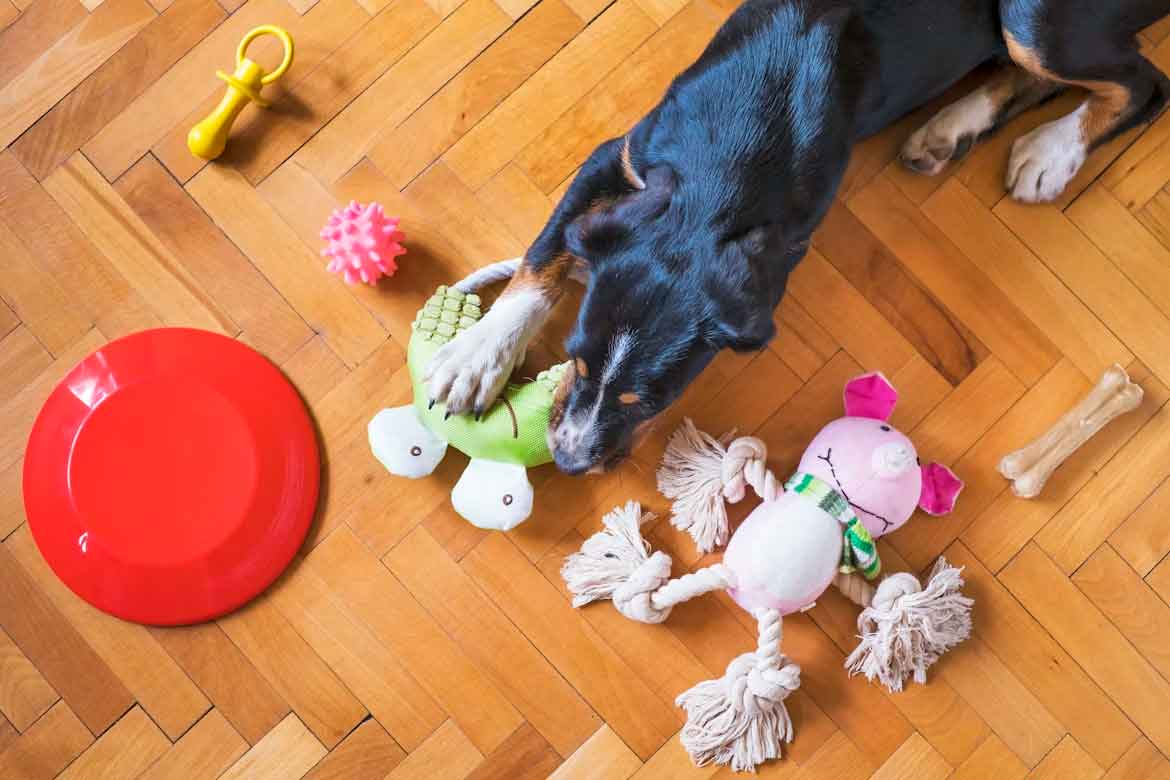
If you've ever bought a toy marketed as "indestructible" only to watch your dog dismantle it in ten minutes, you're not doing anything wrong — you likely just have a different kind of chewer than the toy was designed for. Understanding why dogs destroy toys makes it much easier to pick ones that actually last.
Chewing Serves a Real Purpose, Not Just Boredom
Chewing is a natural behavior tied to several different causes: teething in puppies, jaw exercise and dental health, stress relief, and yes, sometimes boredom. A dog that destroys toys isn't necessarily "being bad" — they're often doing exactly what their instincts are telling them to do.
Not All Dogs Chew the Same Way
Broadly, dogs tend to fall into a few different chewing styles:
- Gentle players — carry toys around, chew occasionally, rarely destroy anything
- Moderate chewers — enjoy chewing sessions but don't aggressively target weak points
- Power chewers — actively work to find and exploit any seam, stuffing, or squeaker, often within minutes
A toy that lasts months with a gentle player might not survive a single session with a power chewer — the toy isn't necessarily poor quality, it's a mismatch with the dog's style.
What Actually Holds Up for Aggressive Chewers
For genuine power chewers, a few practical patterns tend to hold up better:
- Solid rubber toys without hidden stuffing or squeakers to "find"
- Single-piece construction rather than toys with seams or attached parts that can be pulled apart
- Appropriately sized for the dog's jaw strength — a toy too small for a large, strong-jawed dog will fail faster regardless of material
Supervision Changes the Equation
Even a genuinely durable toy can become a hazard once it starts to break down — small torn-off pieces are a choking and blockage risk regardless of how "tough" the toy was marketed as. Periodically checking toys for damage and retiring anything with loose pieces matters more than finding a single "unbreakable" product.
Rotating Toys Reduces Destructive Behavior From Boredom
Keeping only 2-3 toys available at a time and rotating in "new" ones from a larger stash (that have simply been put away for a while) keeps novelty high without buying constantly. For dogs whose destructive chewing is boredom-driven rather than instinct-driven, this alone often reduces the behavior.
Mental Stimulation Can Redirect the Behavior
Puzzle feeders and slow-feed toys that make a dog work for treats or meals channel some of the same drive that leads to destructive chewing, often reducing how hard a dog "attacks" other toys simply because some of that energy has already been spent.