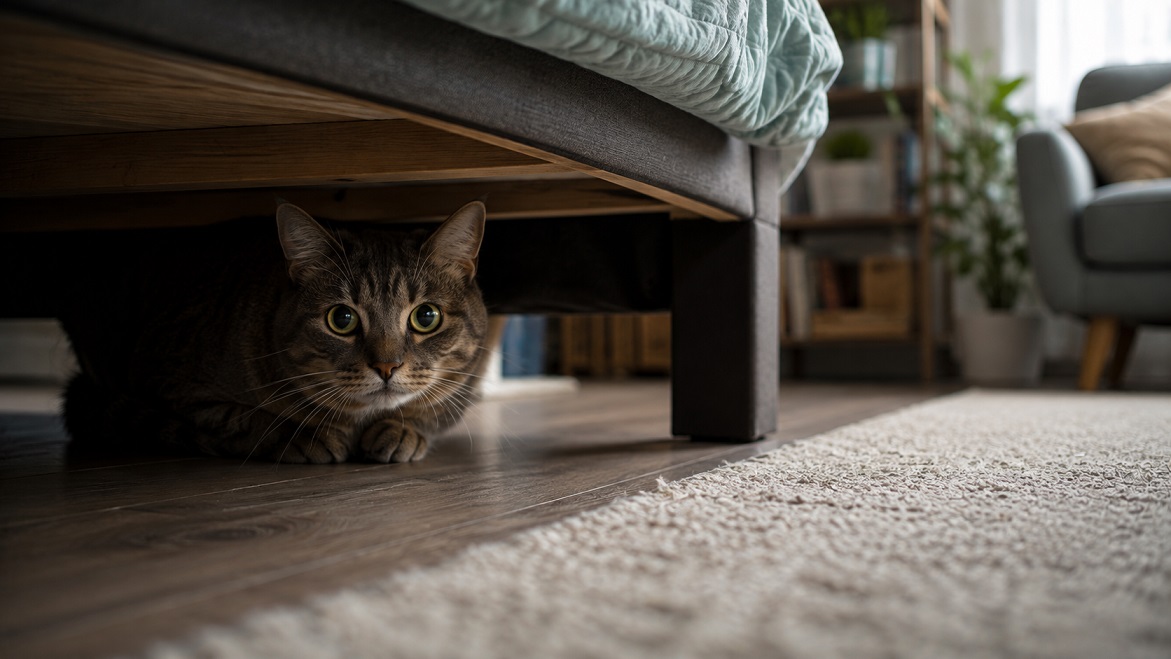
Cats are experts at finding quiet places, so hiding is not automatically a reason for concern. Many cats retreat under a bed, behind furniture, or into a closet simply because they enjoy having a private place to rest. The situation changes when a cat that normally spends time in the open suddenly starts disappearing for long periods or avoids areas it previously enjoyed.
A sudden change in hiding behavior can be linked to something as ordinary as a new piece of furniture or a different daily schedule. It can also happen when a cat feels overwhelmed by noise, unfamiliar people, another animal, or changes in the way the household moves through the home. Understanding what changed before the hiding started is often more useful than trying to pull the cat out of its hiding place.
Why Cats Hide in the First Place
Hiding gives cats control over their surroundings. A covered, quiet location allows a cat to rest without constantly monitoring movement around it. This is especially important because cats often prefer to observe a situation from a protected position before deciding whether to approach.
A hiding spot can therefore be completely normal. The concern is not that a cat has a favorite hiding place. The concern is a noticeable change in how often the cat uses it, how long it stays there, and whether other parts of its routine change at the same time.
For example, a cat that normally naps on the sofa but suddenly spends most of the afternoon underneath the bed is giving you useful information. Something about its environment, routine, physical comfort, or emotional state may have changed.
1. A New Person Is Spending More Time at Home
Visitors, roommates, relatives, or a partner moving into the home can completely change a cat’s daily environment. Even a friendly person can be stressful simply because the cat is not accustomed to their movements, voice, smell, or schedule.
Some cats become curious and approach quickly. Others need days or weeks before they feel comfortable. Forcing an interaction usually makes the situation harder. A better approach is to let the cat observe from a safe distance and allow it to decide when to come closer.
Give the cat access to a quiet area where the new person does not follow it. Keep food, water, litter, and resting areas predictable. Over time, the cat can learn that the new presence does not mean it has lost control of its space.
2. The Furniture or Layout Has Changed
Moving a sofa, adding shelves, replacing a bed, rearranging boxes, or even removing a familiar chair can have a bigger effect on a cat than owners expect. Cats rely heavily on familiar smells, pathways, elevated surfaces, and predictable hiding spots.
A room that looks almost identical to a person can feel completely different to a cat after furniture has been moved. A favorite route may be blocked, a resting spot may disappear, or an open area may suddenly feel exposed.
If hiding begins after a rearrangement, give the cat time to investigate without pressure. Adding a few familiar blankets or beds to the new layout can make the transition easier. Avoid repeatedly placing the cat in the new location yourself. Let exploration happen at the cat's own pace.
3. The Household Has Become Noisier
Construction, loud music, frequent guests, children playing, appliances, or a new home-office routine can turn a previously quiet environment into a much busier one. Cats that are sensitive to sudden sounds may respond by spending more time in protected areas.
Noise does not have to be constant to affect behavior. Repeated unpredictable sounds can be more difficult for some cats than a steady background noise because the cat never knows when the next disturbance will occur.
Create at least one quiet retreat where the cat can escape the busiest part of the home. A covered bed, a quiet room, or an elevated resting area can give the cat somewhere to decompress without requiring complete silence throughout the household.
4. Another Pet Has Changed the Balance
A new dog, cat, rabbit, or other household animal can make a familiar home feel unfamiliar. Even when the animals are not fighting, one may avoid certain rooms because the other animal spends more time there.
Watch for subtle changes. A cat may stop using a favorite water bowl, avoid a hallway, wait until another pet leaves before entering a room, or begin sleeping in unusual places. These behaviors can indicate that access to important resources feels less predictable.
Give each animal separate areas for food, water, rest, and litter. Multiple escape routes are especially useful for cats because they allow them to leave an uncomfortable interaction without being cornered. Shared space should develop gradually rather than being forced from the beginning.
5. The Daily Routine Has Changed
Cats often become attached to routines that owners barely notice. Breakfast may happen at the same time every morning. A person may leave for work and return at predictable hours. Play may happen before bedtime. Even small changes can alter the rhythm of the day.
A new work schedule, vacation, move, school calendar, or change in sleeping habits can therefore affect a cat's behavior. Some cats respond with more vocalization, while others become quieter and spend more time alone.
Try to keep important parts of the routine consistent even when the household schedule changes. Regular feeding, play, and quiet periods can provide useful anchors. The goal is not a rigid timetable but enough predictability for the cat to know what to expect.
6. A Previously Comfortable Room Feels Different
Sometimes the trigger is surprisingly small. A new scent, cleaning product, air freshener, loud appliance, unfamiliar object, or even a strong smell brought home on clothing can make a particular area less appealing.
Cats experience their surroundings through smell as well as sight and sound. A room that has been heavily cleaned or filled with unfamiliar scents may temporarily lose the familiarity that made it attractive.
If your cat suddenly avoids one room, compare what changed there. Did you introduce something new? Move a litter box? Change the bedding? Use a different cleaning product? Identifying the environmental change can be more productive than repeatedly carrying the cat back into the room.
7. The Cat Is Being Approached Too Often
A cat that hides may unintentionally teach its owner to check on it more frequently. The owner calls, reaches underneath the bed, picks up the cat, or repeatedly brings it into the living room. From the cat's perspective, the hiding place then stops being a reliable escape.
Unless there is an immediate safety concern, give the cat some control over when it comes out. Sit quietly nearby without reaching toward it. Speak normally and allow the cat to observe you. If it chooses to approach, keep the interaction calm rather than turning the moment into a long handling session.
Respecting a hiding place does not reward fear. It gives the cat an opportunity to regain confidence in its environment.
When Hiding Deserves Closer Attention
A sudden increase in hiding should not always be explained by a household change. Cats can become withdrawn when they are uncomfortable or unwell, and they may not show obvious signs at first. A cat that hides more while also eating less, drinking differently, changing litter box habits, losing interest in normal activities, or behaving unusually deserves closer attention.
The important clue is a change from the cat's normal pattern. Owners who know where their cat usually sleeps, when it eats, how often it plays, and how it normally interacts with people are more likely to notice subtle changes early.
If several unusual behaviors appear together or the change persists without an obvious environmental explanation, it is worth discussing the situation with an appropriate animal health professional rather than assuming the cat is simply being antisocial.
How to Make the Home Feel Safe Again
Start by restoring predictability. Keep important resources in consistent locations, provide quiet resting areas, and avoid repeatedly disturbing the cat's chosen retreat. If a recent change is clearly connected to the hiding, reverse it when practical or introduce the change more gradually.
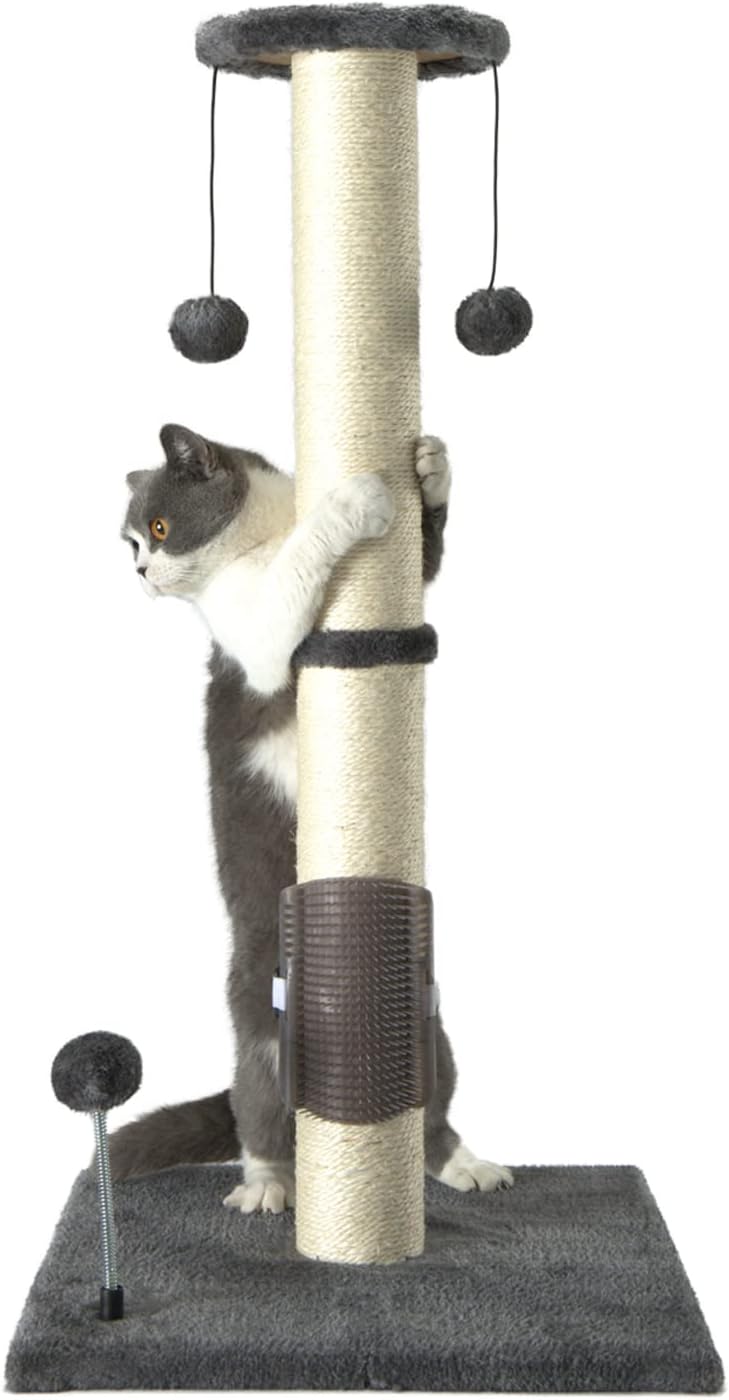
Vertical spaces can also make a difference. A stable cat tree, shelf, or elevated resting area gives the cat a way to observe household activity without being in the middle of it. Some cats feel more comfortable when they can watch from above rather than hiding completely.
Play can help rebuild confidence, but timing matters. Do not drag a frightened cat out of hiding to play. Instead, offer opportunities when the cat begins showing curiosity. Short, predictable sessions are often more useful than overwhelming the cat with constant attention.
The Goal Is Not to Eliminate Hiding
A healthy cat does not need to spend every hour in the center of the household. Hiding can be a normal part of feline behavior, and having a private retreat can actually make a home more comfortable.
The goal is to understand the difference between a cat choosing solitude and a cat withdrawing because something about its environment has become difficult. A cat that occasionally disappears for a nap and later returns to eat, play, explore, and interact is very different from a cat that suddenly avoids everyone and everything.
Instead of asking, “How do I make my cat stop hiding?” a better question is, “What changed that made hiding more appealing?” That shift in perspective can reveal problems that are easy to overlook.
Sometimes the answer is a new person, a rearranged room, a noisy week, another pet, or a disrupted routine. Sometimes there is no obvious environmental explanation. Paying attention to the pattern gives your cat something valuable: the chance to be understood before a small change becomes a much bigger problem.