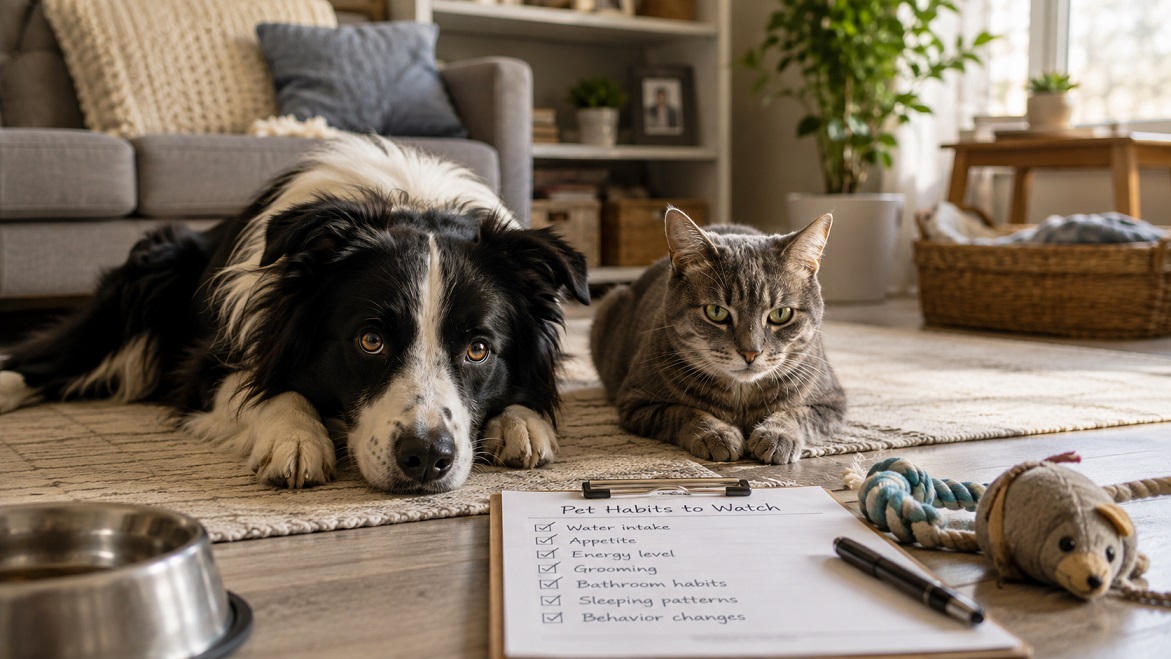
Most pet owners become concerned when something dramatic happens: a pet refuses food, starts destroying furniture, has an accident indoors, or suddenly behaves like a completely different animal. The harder signs to notice are usually the ones that develop slowly.
A dog that starts drinking more water may simply seem thirsty. A cat that spends more time sleeping may appear to be enjoying a lazy day. A rabbit that becomes quieter may be mistaken for a calm rabbit. Small changes are easy to dismiss because they do not look urgent, especially when the pet is still eating, walking around, and behaving normally in other ways.
The problem is that gradual changes can become the new normal before an owner realizes anything has shifted. Learning to notice patterns does not mean worrying about every unusual moment. It means knowing which everyday habits are worth watching.
1. Your Pet Is Drinking More Than Usual
Fresh water should always be available, and daily water intake can naturally change with temperature, activity, diet, and other conditions. The important clue is a persistent change from what is normal for that individual pet.
If a dog that normally takes occasional drinks suddenly empties the bowl much faster, or a cat begins visiting the water source repeatedly, take note. Do not rely only on whether the bowl looks empty because multiple pets may share it or water may evaporate.
Tracking the change for a few days can provide useful information. If increased drinking continues or appears alongside changes in urination, appetite, weight, energy, or behavior, it should not simply be dismissed as a new preference.
2. Eating Habits Slowly Change
Owners often notice when a pet refuses an entire meal but overlook smaller changes. Eating more slowly, leaving a particular part of the meal, becoming unusually selective, begging more often, or changing interest in treats can all be useful clues.
Food preferences can change for harmless reasons, especially when pets are offered many different foods. But a consistent shift is different from an occasional skipped bite.
Pay attention to the full pattern. Is the pet still excited when food appears? Does it approach the bowl and then walk away? Does it chew differently? Is the change happening with regular meals but not treats? These details can help distinguish a simple preference from a broader change in behavior.
3. Sleeping Patterns Become Different
Pets sleep a lot, and their sleep needs vary by age, species, activity level, and individual temperament. That makes changes in sleep particularly easy to overlook.
The useful question is not whether your pet sleeps “too much” according to a general number. Ask whether its current pattern is different from its own normal routine. A dog that suddenly stops joining the household in the evening or a cat that spends nearly the entire day in one location may be showing a change worth observing.
Look at what happens when the pet is awake. Does it still want to play? Does it respond normally to familiar sounds? Is it interested in food and interaction? A change in sleep combined with other changes carries more meaning than an isolated long nap.
4. Grooming Looks Different
Cats may spend a large portion of their waking time grooming, while dogs also groom themselves as part of normal behavior. A noticeable increase or decrease can therefore be significant.
A cat that suddenly stops keeping its coat tidy may be having difficulty maintaining its usual routine. Excessive licking can also become a concern when it focuses repeatedly on one area. Dogs may lick their paws or another body area occasionally, but repeated attention to the same spot is different from ordinary grooming.
Do not assume that every grooming change is behavioral. Check the skin and coat when your pet allows it, and note whether there are changes such as redness, hair loss, odor, swelling, or sensitivity.
5. Bathroom Habits Quietly Shift
Changes in urination or bowel habits are among the easiest signals to overlook because owners may not see every bathroom trip. For cats, changes are often easier to notice because litter boxes provide a visible record of frequency and output.
A cat that begins visiting the litter box repeatedly, avoids it, produces noticeably different amounts, or starts having accidents outside the box is not simply being difficult. Dogs can also show changes through accidents, unusual frequency, difficulty settling during bathroom trips, or changes in stool.
One isolated variation may not mean much. A persistent pattern, especially when combined with changes in drinking, appetite, energy, or comfort, deserves attention rather than punishment.
6. Your Pet Stops Doing Something It Used to Love
This is one of the most useful habits to monitor because owners already know what their pets normally enjoy. Maybe your dog used to race toward the leash but now watches from its bed. Maybe your cat stopped jumping onto a favorite windowsill. Maybe your rabbit no longer investigates a familiar toy.
Loss of interest does not automatically indicate a serious problem. Weather, age, changes in the environment, and routine can all influence activity. But a sustained decline in an activity that once reliably attracted the pet's attention is worth noticing.
Try comparing the change with the rest of the day. Is the pet still enthusiastic about food but uninterested in play? Does it avoid jumping but walk normally? Does it interact normally with people but stop exploring? Specific differences are more useful than a general impression that the pet seems “off.”
7. The Pet Becomes More Irritable
A pet that suddenly growls, swats, avoids handling, or reacts strongly to ordinary interactions may be communicating that something has changed. Owners sometimes interpret this as a personality problem because the behavior appears directed at them.
Instead of immediately correcting the behavior, consider what happens immediately beforehand. Does the reaction occur when the pet is touched in one particular area? When it is picked up? During grooming? Around food? When another animal approaches?
Context matters. A pet that becomes defensive in a specific situation may be telling you that the situation is uncomfortable. Giving the animal more space while you observe the pattern is usually more productive than repeatedly testing the reaction.
8. Your Pet Starts Following You Everywhere
Extra affection can be sweet, so owners may not think twice when a pet suddenly becomes much more attached. But a noticeable change in independence can be another useful signal.
A dog that suddenly refuses to settle in another room, a cat that follows its owner constantly, or a rabbit that becomes unusually focused on human presence may be responding to a change in routine, environment, or comfort.
Look for other clues rather than treating increased attachment as a problem by itself. If the pet is eating, sleeping, playing, and behaving normally otherwise, the change may simply reflect a temporary shift in routine. If several habits change at once, pay closer attention.
9. Small Changes in Body Language
Pets communicate constantly through posture, movement, ears, tail position, facial expression, and the distance they choose to keep from people. Because owners see these signals every day, they may notice something feels different before they can describe exactly what changed.
A normally relaxed dog may become tense when approached. A cat may spend more time crouched or with its body tucked tightly underneath it. A rabbit may become unusually still or spend more time pressed into a hiding area.
Body language is most useful when compared with the individual pet's normal behavior. There is no single posture that means the same thing in every situation. Look for repeated changes and consider what happens around them.
Why Owners Miss Gradual Changes
Daily life makes small changes difficult to see. A pet's routine can shift over weeks rather than hours, and owners naturally adapt to those changes. What was unusual on Monday may feel normal by Friday.
Another problem is that many pets compensate well. They may continue eating and interacting while quietly changing other behaviors. That is why simple observation is valuable. Knowing where your pet normally sleeps, how it reacts to meals, how it moves around the home, and what activities it seeks out gives you a baseline for comparison.
Photos and short notes can help when a change is difficult to describe. You do not need a complicated tracking system. Recording unusual behaviors, approximate timing, food changes, bathroom changes, or environmental events can reveal patterns that are hard to remember accurately.
What You Should Do When a Habit Changes
Start by looking for recent changes in the environment. Has the household schedule changed? Is there a new person or animal? Did you move furniture, change food, introduce a new product, or alter access to a familiar area?
Then look at the behavior itself. When does it happen? How often? What happens immediately before and after? Is the change becoming more frequent, or has it remained stable?
Avoid assuming that a behavior is intentional mischief. Punishing a pet for a new habit can hide useful information and may increase stress. First understand what the behavior might be communicating.
When a Small Change Is Worth Taking Seriously
A single unusual moment does not mean something is wrong. Pets have off days, unusual reactions, and changing preferences just like people do. The bigger signal is persistence, escalation, or the appearance of several changes at the same time.
For example, increased drinking combined with changes in urination is more meaningful than either observation alone. Reduced activity combined with changes in appetite or grooming also deserves more attention than simply taking an extra nap.
If a new behavior persists, worsens, or appears alongside obvious discomfort, changes in eating or drinking, repeated vomiting or diarrhea, breathing changes, difficulty moving, or other concerning signs, contact an appropriate animal health professional rather than waiting for the problem to become unmistakable.
The Habits That Tell You the Most
The most useful observations are often ordinary ones. How your pet eats. Where it sleeps. How it moves through the house. What makes it excited. What it avoids. How often it uses the litter box or asks to go outside. These patterns create a picture of what normal looks like for that individual animal.
You do not need to become obsessed with every detail. You simply need to notice when the familiar pattern changes and resist the temptation to explain everything away as age, attitude, boredom, or stubbornness.
Pets cannot tell us that something feels different. Their habits are often the closest thing we have to a daily conversation. The earlier you notice a meaningful change, the easier it can be to understand what is happening and decide what needs to change next.
Sometimes the explanation is simple: a new routine, a different environment, or a temporary disruption. Other times, a small behavioral change is the first clue that deserves closer attention. Either way, noticing the difference is where good care begins.