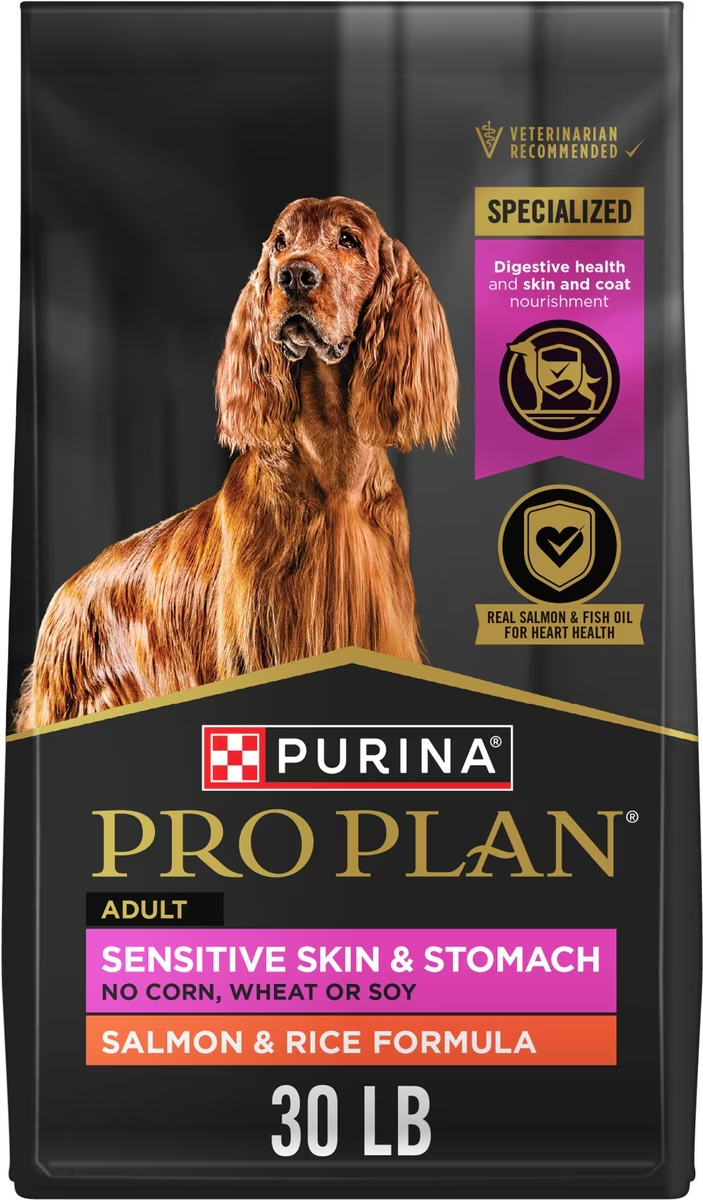
If you've ever stood in the pet food aisle staring at a dozen bags that all claim to be "complete and balanced," you're not alone. The truth is, a healthy 8-week-old puppy and a healthy 9-year-old dog have almost nothing in common nutritionally — and feeding them the same food can quietly work against their health for years before you notice anything's wrong.
Here's what actually changes at each life stage, and what to look for when you're choosing food.
Puppies: Growth Is the Priority, But Not at Any Cost
Puppies need more calories, protein, and fat per pound of body weight than adult dogs — their bodies are literally building themselves. But there's a detail most new owners miss: large-breed puppies need a different formula than small-breed puppies, not just a bigger bag of the same food.
Large and giant breeds (think Labradors, German Shepherds, Great Danes) grow so fast that if they're overfed calories or calcium during the first year, it can increase the risk of hip and elbow problems later in life. Look for a food specifically labeled for "large breed puppy" — it's formulated for slower, more controlled growth, not faster growth.
- Small and medium breed puppies: standard puppy formula is fine
- Large and giant breed puppies (expected adult weight over 50 lbs): look for a large-breed-specific puppy formula
- Switch to adult food around 12 months for small/medium breeds, 18-24 months for large breeds
Adult Dogs: Less About Growth, More About Maintenance
Once a dog reaches adulthood, the goal shifts from growth to maintaining a healthy weight and energy level. This is where a lot of owners accidentally overfeed — puppy habits (bigger portions, more frequent meals) stick around even after the dog's caloric needs have dropped.
A simple check: you should be able to feel your dog's ribs with light pressure, without them being visibly sharp. If you can't feel them at all, or if there's no waist visible from above, it's worth adjusting portions before it becomes an ongoing weight problem.
Activity level matters more than age here. A high-energy working breed and a low-energy companion breed of the same age can have very different calorie needs, even at the same weight.
Senior Dogs: Different Priorities, Not Just "Less Food"
Senior dog food often gets marketed as simply "lower calorie," but the more important changes are usually:
- Joint support — ingredients like glucosamine and chondroitin become more relevant as cartilage naturally wears down
- Easier-to-digest protein — many seniors benefit from high-quality, easily digestible protein rather than simply less protein
- Lower calorie density — because activity typically decreases, but this should be a byproduct of the formula, not the main goal
There's no universal age when a dog "becomes a senior" — it varies a lot by breed size. Large breeds are often considered senior around 6-7 years old, while small breeds may not hit that stage until 10-12. If you're not sure where your dog falls, it's worth asking your vet at their next checkup rather than guessing by age alone.
The Transition Matters More Than the Food Itself
One mistake that causes more upset stomachs than the actual food choice: switching too fast. A dog's digestive system needs time to adjust to a new formula. A gradual transition over 7-10 days — mixing increasing amounts of the new food with the old — almost always prevents the digestive issues owners blame on the new food itself.
A rough guide:
- Days 1-3: 25% new food, 75% old food
- Days 4-6: 50/50
- Days 7-9: 75% new food, 25% old food
- Day 10: 100% new food
The Bottom Line
There's no single "best" dog food — there's the right food for your dog's current life stage, size, and activity level. If you're unsure where to start, we've put together a collection of options in our Dog Food category.
And as always: if your dog has a diagnosed health condition, is significantly under or overweight, or you're just not sure what's right for them, a quick conversation with your vet is worth more than anything you'll read online — including this article.